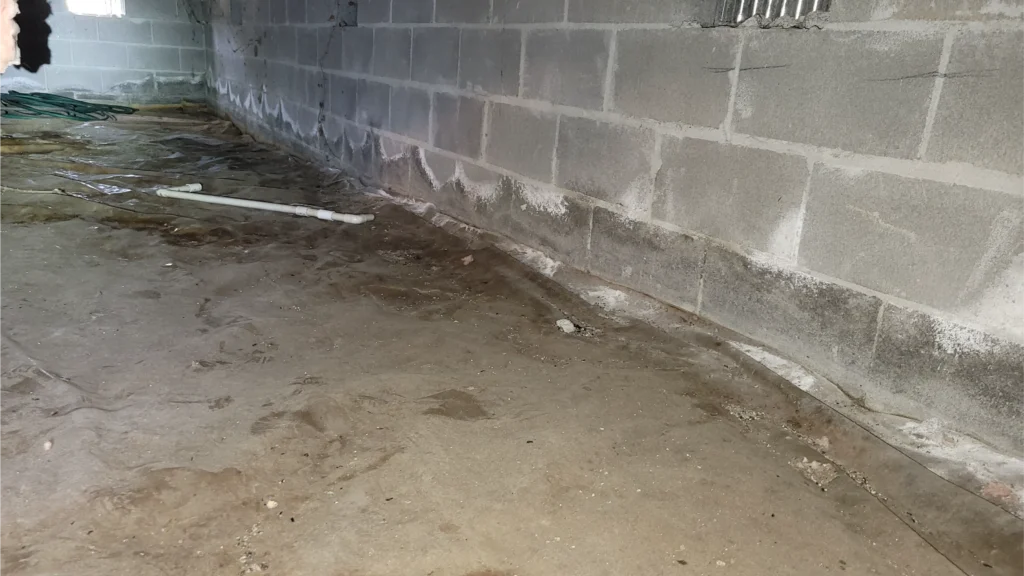
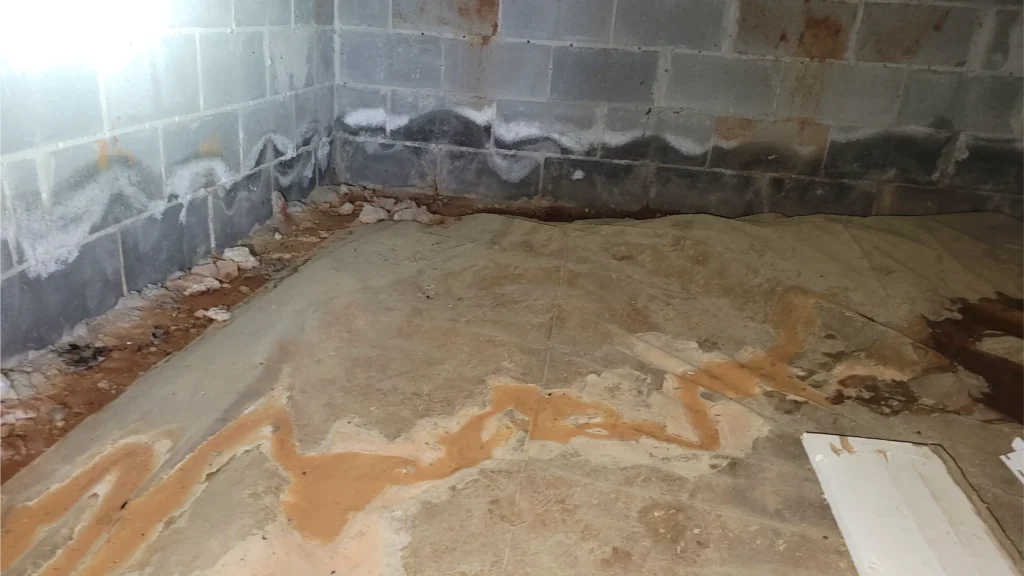
If you’ve ever peeked under your home days after a storm and found moisture, standing water, or a musty smell, you’re not alone. For many Georgia homeowners, crawl space moisture lingers long after the rain clouds have passed. But why does this happen?
It often comes down to how water gets trapped under your home, along with Georgia’s soil, climate, and older construction. Left alone, that moisture can lead to mold, pests, rot, and higher energy bills.
Here, we’ll break down the science of crawl space moisture, common causes, and what you can do to keep your crawl space dry for good.
The Surprising Science Behind Crawl Space Moisture
In Georgia, soil saturation can keep crawl spaces wet for days or even weeks. This is because Georgia’s dense and clay-heavy soil holds onto water longer than looser soil types. Even if your crawl space doesn’t flood during rain, water can slowly seep in through the ground over time. The water table in many areas also sits close to the surface, which means groundwater can easily rise and intrude into your crawl space.
Even if your crawl space doesn’t take in standing water, the high humidity in our region can still cause problems. Warm, humid air enters the crawl space through vents or gaps and condenses on cooler surfaces, resulting in a damp environment.
Common Causes of Persistent Crawl Space Water
Several factors can cause water to pool or remain in your crawl space:
- Poor grading or negative slope around the home: If the land around your home slopes toward the foundation, rainwater naturally flows toward your crawl space instead of away from it.
- Clogged or missing gutters/downspouts: Water from your roof needs a clear path away from your home. Without proper gutters or downspouts, that water can collect right next to your crawl space and slowly seep in.
- No vapor barrier or faulty encapsulation: Without a high-quality vapor barrier or full encapsulation system, moisture can enter through the ground and linger.
- Improper or missing sump pump system: If you don’t have a sump pump or it’s not working properly, water can quickly accumulate and stay put.
Learn how sump pumps work in crawl spaces.
Why Georgia Homes Are Especially At Risk
Georgia homes, especially in Macon, Warner Robins, Perry, and Forsyth, face several challenges that make crawl space moisture more likely. The region’s clay-heavy soil holds water much longer than sandy or loamy soil, allowing moisture to linger near the surface and slowly infiltrate crawl spaces long after the rain stops. Frequent rainstorms and consistently high humidity levels add to the problem, as moisture can accumulate under the home even when it’s not actively raining.
Additionally, many older homes in Central Georgia were built with vented crawl spaces, a once-common construction method that was believed to improve air circulation but now contributes to moisture issues.
How Long Should Water Stay in Your Crawl Space?

The short answer: not long at all. If water is still sitting in your crawl space more than 24-48 hours after a storm, it’s a sign of poor drainage. When water lingers, it can lead to several issues. Mold can start growing in as little as 24 hours under the right conditions, and that moisture can cause musty odors to spread throughout your home. Prolonged dampness can also lead to wood rot, which can weaken floor joists and other structural components. On top of that, a wet crawl space becomes an inviting environment for termites, rodents, and other pests that thrive in moisture.
What You Can Do to Solve the Problem
Short-Term Fixes
These are stop-gap measures that can help reduce the symptoms, but they won’t permanently fix the problem:
- Clean your gutters and extend your downspouts: Make sure water is being directed at least several feet away from your home.
- Temporary dehumidifiers: These can reduce moisture levels short-term, but they don’t address the root issue.
- Improve grading around your home: Ensure the soil slopes away from the foundation.
Learn how dehumidifiers work in crawl spaces and why you need one.
Long-Term Solutions
If you’re serious about keeping your crawl space dry and healthy, it’s worth investing in professional solutions:
- Full crawl space encapsulation: This includes sealing the ground, walls, and vents with moisture barriers. Encapsulation protects your home from external moisture and keeps humidity under control.
- Sump pump installation: A sump pump actively removes any water that enters your crawl space, preventing standing water from collecting.
- Drainage system: A proper french drain inside your crawlspace can directly water toward the sump pump where it can be removed quickly.
These solutions, when installed correctly, provide lasting protection for your home. Explore our full range of crawlspace solutions.
Contact Central Georgia Crawlspace for a Free Crawlspace Inspection!
Rain might be over, but lingering crawl space moisture is a red flag. The longer it stays, the more damage it can cause. At Central Georgia Crawlspace, we’ve spent 15+ years helping local homeowners fix these issues for good.
If your crawl space stays wet after rain, let’s talk. Contact us for a free inspection, and we’ll find the right solution for your home!