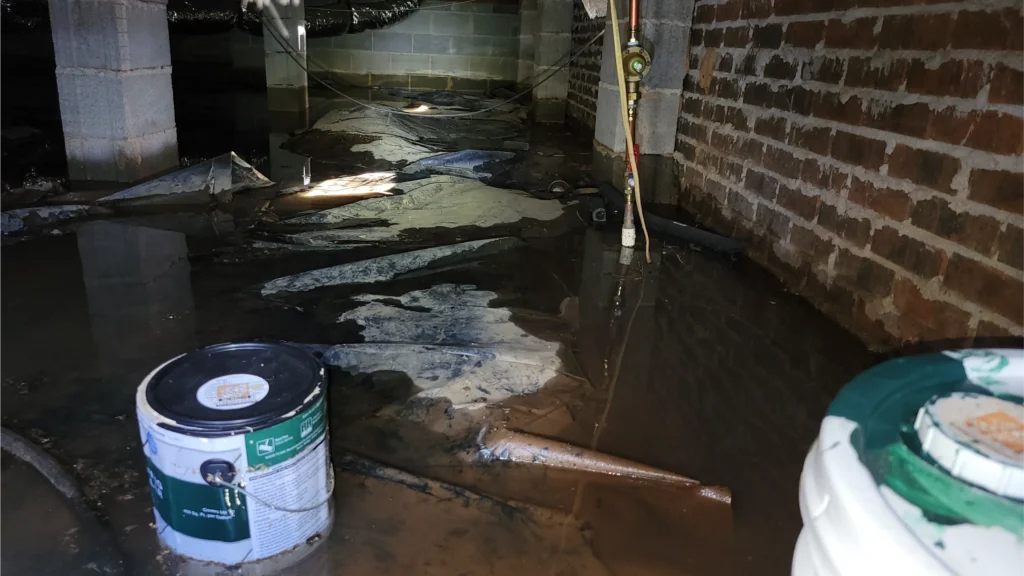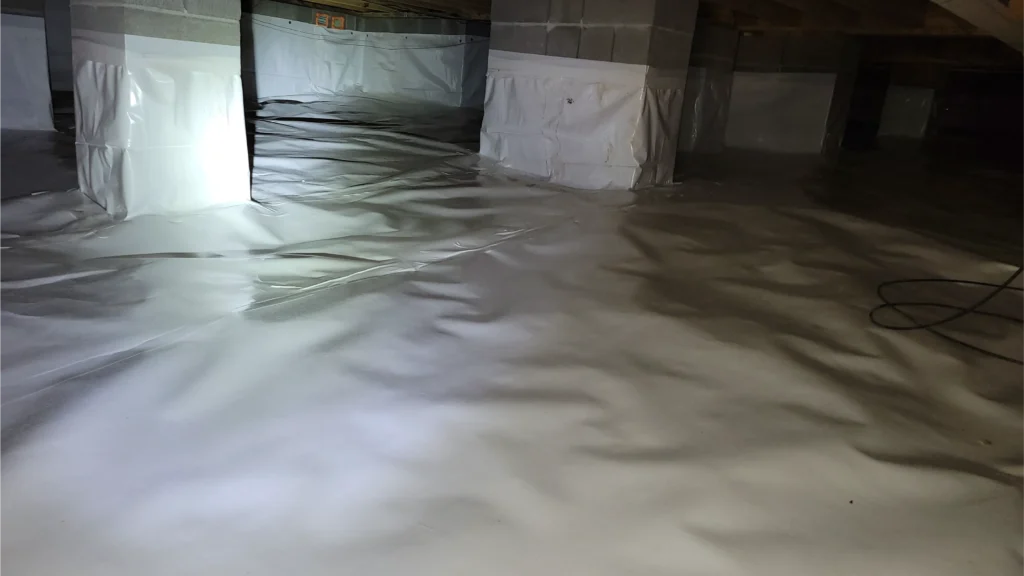
If you live in Central Georgia, you’ve likely noticed how the area’s red clay behaves almost like a sponge. While it supports landscaping, it can create serious problems for your home’s foundation. Many homeowners don’t think about their crawl space until warning signs appear, like a musty odor indoors or standing water after a heavy storm in the summer. At that point, the main question becomes: should the problem be addressed from the outside or the inside?
To help you make the best decision for your home, here’s how exterior crawl space waterproofing and an interior crawl space drainage system work.
Exterior Crawl Space Waterproofing: How It Works
Exterior waterproofing is designed to prevent water from reaching your crawl space in the first place. It focuses on controlling surface water and managing moisture in the surrounding soil. Common exterior waterproofing methods include:
- Grading Improvements: Ensuring the ground slopes away from your foundation so water doesn’t collect near the walls.
- Gutter and Downspout Management: Directing roof runoff safely away from the home to prevent pooling.
- Exterior French Drains: Installing underground piping systems to redirect groundwater away from the foundation.
- Waterproof Coatings: Applying sealants or membranes to the exterior walls to block moisture intrusion.
The main advantage is that it helps keep foundation walls dry by stopping water early. However, in Central Georgia, dense clay soil holds moisture for long periods, which can clog drainage systems over time. Installation can also be invasive, often requiring excavation that disrupts landscaping, patios, or decks.
Even with these measures, exterior systems cannot always stop water from entering beneath the home. Moisture can still rise through the soil and into the crawl space, especially during heavy rainfall.
Interior Crawl Space Waterproofing: How It Works
Interior waterproofing uses a different, more practical strategy. Instead of trying to keep all water out, which is nearly impossible in a humid, rain-heavy environment, it focuses on controlling and removing water after it enters the crawl space.
By managing moisture rather than simply trying to block it, interior waterproofing helps prevent the long-term structural damage caused by persistent dampness.
An interior crawl space drainage system typically includes several key components:
Perimeter Trenching
A shallow trench is carefully excavated along the inside perimeter of the crawl space walls. This creates a controlled pathway that directs water away from the center of the crawl space.
Perforated Piping
A specialized crawl space drainage system uses perforated piping installed within the trench. This pipe collects water that seeps through foundation walls and, more importantly, water that rises from the soil below.
Gravel Filtration
The pipe is surrounded by a layer of clean, washed gravel. The gravel helps prevent heavy Georgia clay from clogging the system while also allowing water to flow more freely into the pipe.
Hydrostatic Pressure Management
This system is effective because it addresses hydrostatic pressure directly. In Georgia, saturated soil can force water upward through the crawl space floor. The interior drainage system acts as a relief point, capturing that pressure before it leads to standing water.
Sump Pump Integration
Once collected, the water is directed into a sump basin. A sump pump crawl space system then removes the water and discharges it safely away from the foundation through a designated drainage line.
Which Waterproofing Method Works Best in Georgia Homes?
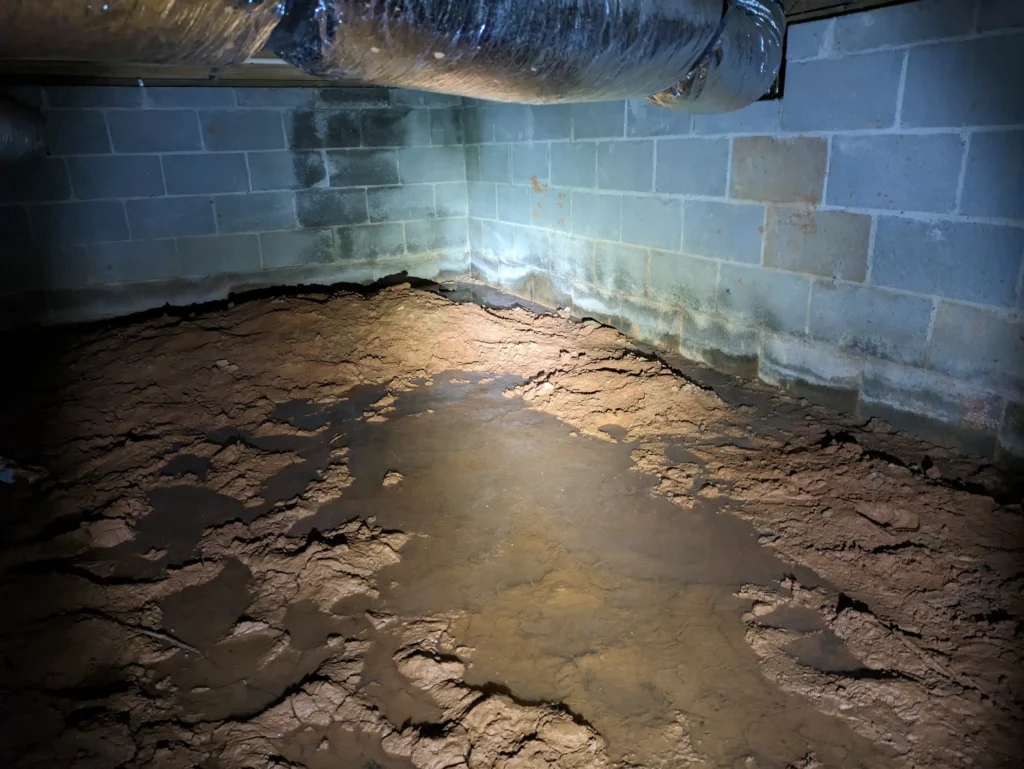
Georgia’s climate presents unique challenges, including high humidity, frequent rainfall, and soil that retains water. These factors create ongoing pressure around and beneath your foundation, making moisture control more complex.
While exterior crawl space waterproofing can help reduce surface water, it often falls short on its own. An interior crawl space drainage system is typically the more dependable option for several key reasons:
- Poor Soil Drainage: Clay soil holds moisture against the foundation, increasing the risk of intrusion
- Groundwater Movement: Water can rise from below the home, bypassing exterior barriers entirely
- Long-Term Reliability: Interior systems are easier to maintain and more effective at handling ongoing moisture
For many homeowners, the best solution is a combination of both methods. Exterior improvements, like proper grading and gutter extensions, help reduce the amount of water reaching the foundation. Meanwhile, an interior crawl space drainage system paired with a sump pump crawl space setup ensures any remaining water is properly managed.
Making the Right Choice for Your Home
Waterproofing your crawl space is essential for protecting your home’s structure and maintaining healthy indoor air. If left untreated, moisture can lead to mold, wood rot, and costly repairs.
If you’re dealing with dampness or water intrusion, it’s important to choose a solution suited to your property, as soil, drainage, and foundation all play a role. Keeping your crawl space dry helps preserve your home’s value and safety, and addressing issues early can prevent more serious problems later on.
Contact Central Georgia Crawlspace for Waterproofing Solutions Today
If you’re unsure where to start, scheduling a crawl space inspection is a smart first step. A professional evaluation with Central Georgia Crawlspace can identify the source of the problem and recommend the most effective solution for your home.
Contact us online or at (478)-207-5895 to schedule a crawl space inspection.